A residence on the rocks
From the boat shelters of the Colonna fishermen to the seaside summer camp of the 1930s, and on to today.
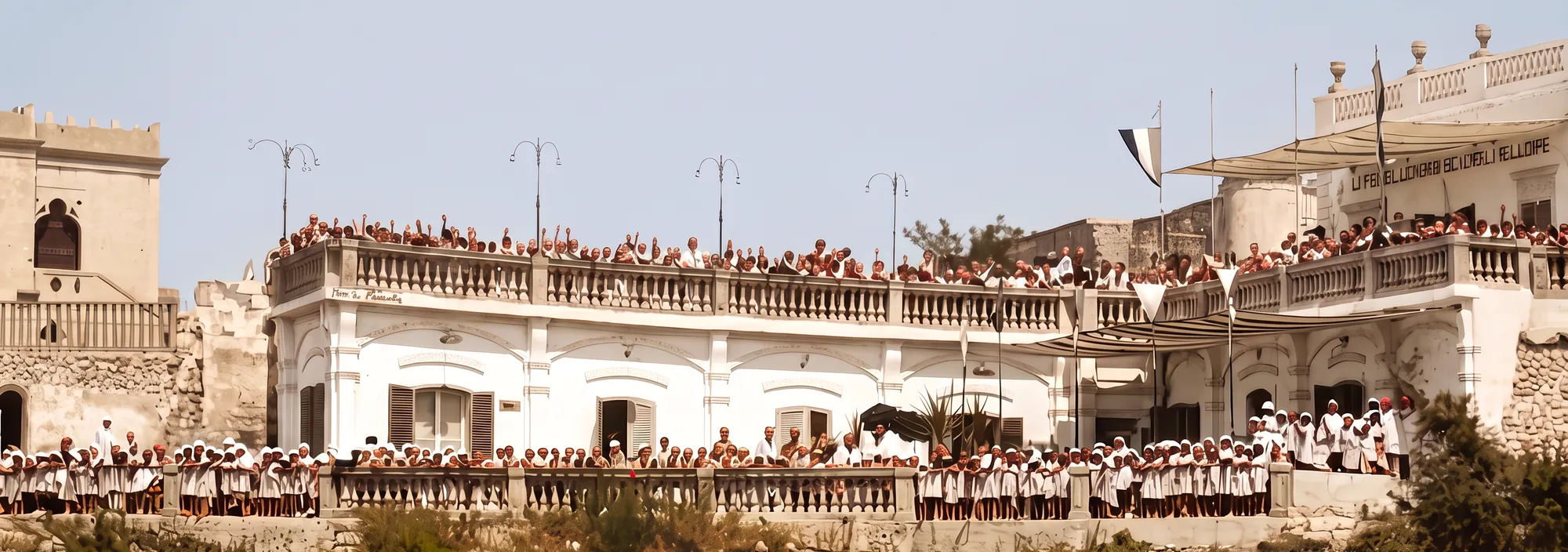
The house in the 1930s, when it was a seaside summer camp. Period photograph, colourised.
Trani
Pearl of the Adriatic, Trani is a town with a long and very rich seafaring tradition. Sources tell us that it was in Trani that the “Ordinamenta et Consuetudo maris edita per consules civitatis Trani” were written. Also known as the “Maritime Statutes”, they are a body of maritime law issued in 1063 in Trani at the behest of the Norman count Peter of Trani, and are considered the oldest maritime code of the medieval Mediterranean (Nicola A. Imperiale). For this reason, and because of the town’s economic and political weight, it is thought that Trani could never become a Maritime Republic: in the age of the Crusades it was too important to be free from royal rule.
Colonna
The Colonna peninsula has always been part of Trani’s history. Since the Middle Ages the Monastery has stood on the peninsula, and for centuries it remained separate from the town, protected by its walls. Local historians and experts tell of living traditions of faith at the Monastery, linked to Saint Stephen the Protomartyr and to the miracle of the lilies, with their early, lush and wonderful flowering repeated year after year. Curiously, the Monastery seems to have held exclusive fishing rights in the waters of Colonna, a sign of the prosperity of the place and its people.
The house
Given the shape of the coast, the age of the tufa-stone arches and the trapdoors in the upper vaults, it is thought that the building was once used as storerooms and shelters for the boats of the Colonna fishermen, who hoisted goods from sea level up to the level of the Monastery.
The first photographs of the building date back to the 1930s, when, in summer, many of the town’s children played and spent their days together in the rooms that make up Ammare today. The house had become a summer seaside camp, since from those years onwards such activities spread more and more for the benefits of iodine and sun.
After years of neglect, from the late 1950s to the present day the property has belonged to the Fattibene family, who for about eighty years have run and improved it with love and dedication, in dialogue with the sea, the sun and the wind, to welcome people in a house on the rocks: an expression of the dialogue between people and nature, and today devoted to it, aware that we are the custodians of those rocks, and that the sea remains the master of the house.
Colonna today
The town has grown all the way out here, yet Colonna has remained an island.
At the tip still stands the monastery of Santa Maria, founded by Benedictine monks in 1098: a Romanesque façade, its rose window turned to the sea. Inside it keeps a fifteenth-century wooden crucifix, which Trani celebrates every 3 May. The cloister now belongs to the town and hosts exhibitions and talks.
All around, within three minutes on foot, the sea changes three times: sand, pebbles, rocks. In the evening the Cristoforo Colombo seafront fills with people from Trani out for their stroll, as it always has.
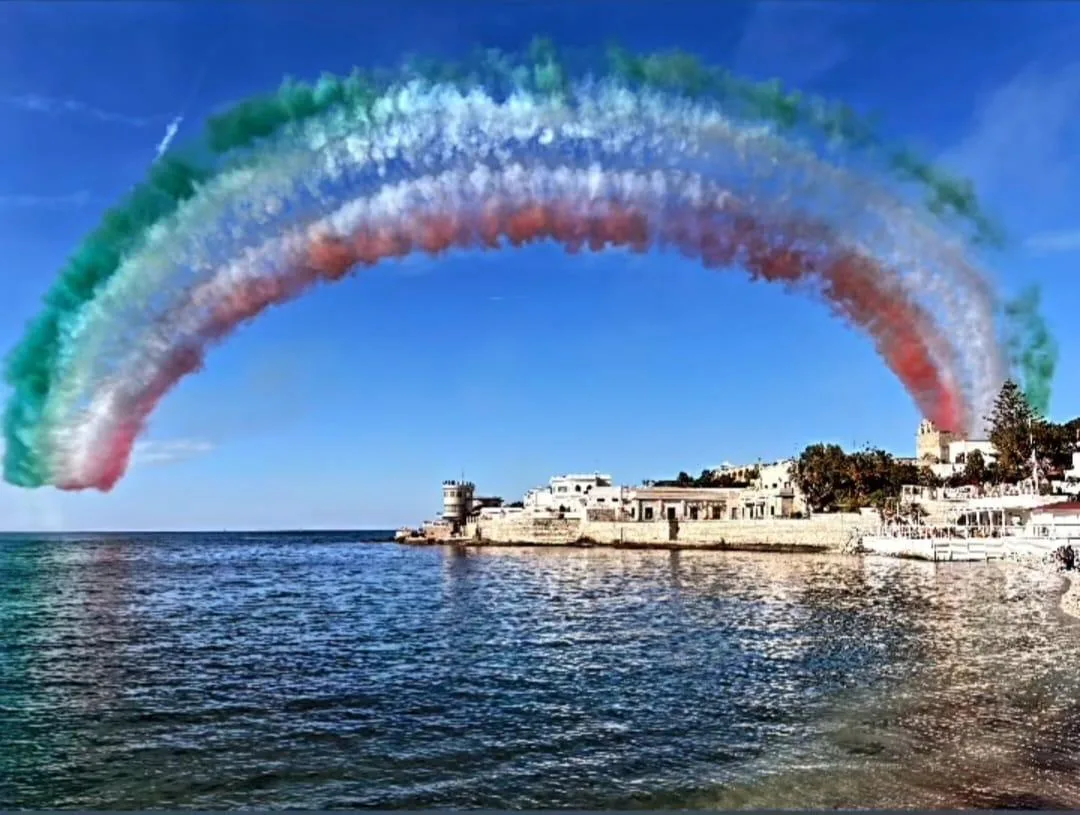
And on some days it is the sky that celebrates. On 12 May 2024 the Frecce Tricolori flew over Trani for the first time, right above Colonna.